A Toprak ve Yeryüzü Association Project
Ecological Living Centre
A centre for returning to the soil and growing together.

Our Vision
Aiming to become the symbol of a new way of life
The Ecological Living Centre is a comprehensive and large-scale life project that, once realised, could become a symbol of a new way of life and transformation for all humanity. The Centre is at its establishment stage; its units will be announced on this page as they come to life.
The Ecological Living Centre is a community space open to everyone living in the city and the countryside, continuously learning and transforming.
❝
Here we experience producing by touching the soil, learning ecological cycles by living them, and transforming together.
— Ecological Living Centre
Our Philosophy
Why the Ecological Living Centre?
01
Producing by Learning
A learning environment that turns knowledge into practice and practice into experience. Our relationship with the soil is our best teacher.
02
Transforming Together
A way of life that grows with the community rather than alone, and gets stronger by sharing. Transformation is only possible together.
03
Returning to the Soil
Production and consumption practices outside the industrial system, in tune with the rhythm of nature. Returning to the soil means becoming free.
Our Areas of Work
What Do We Aim to Do?
Permaculture Training
We aim to teach how to build a relationship with the soil, understand natural cycles and practise sustainable farming techniques. We aim for participants to experience the steps of observation, design and practice together and to develop a permaculture perspective for their own living spaces.
Ecological Farming
We aim to apply nature-compatible farming methods without chemical fertilisers or pesticides. We plan to try out, together, production models that put soil health first, support biodiversity and use water efficiently.
Community Gardens
We aim to strengthen neighbourly ties by creating shared production areas within the city. We aim for gardens that are sown, tended and harvested together to make a culture of sharing, food sovereignty and community solidarity visible.
Project Visuals
Units of the Centre
Design and visual work prepared for the Ecological Living Centre. The images are representative.
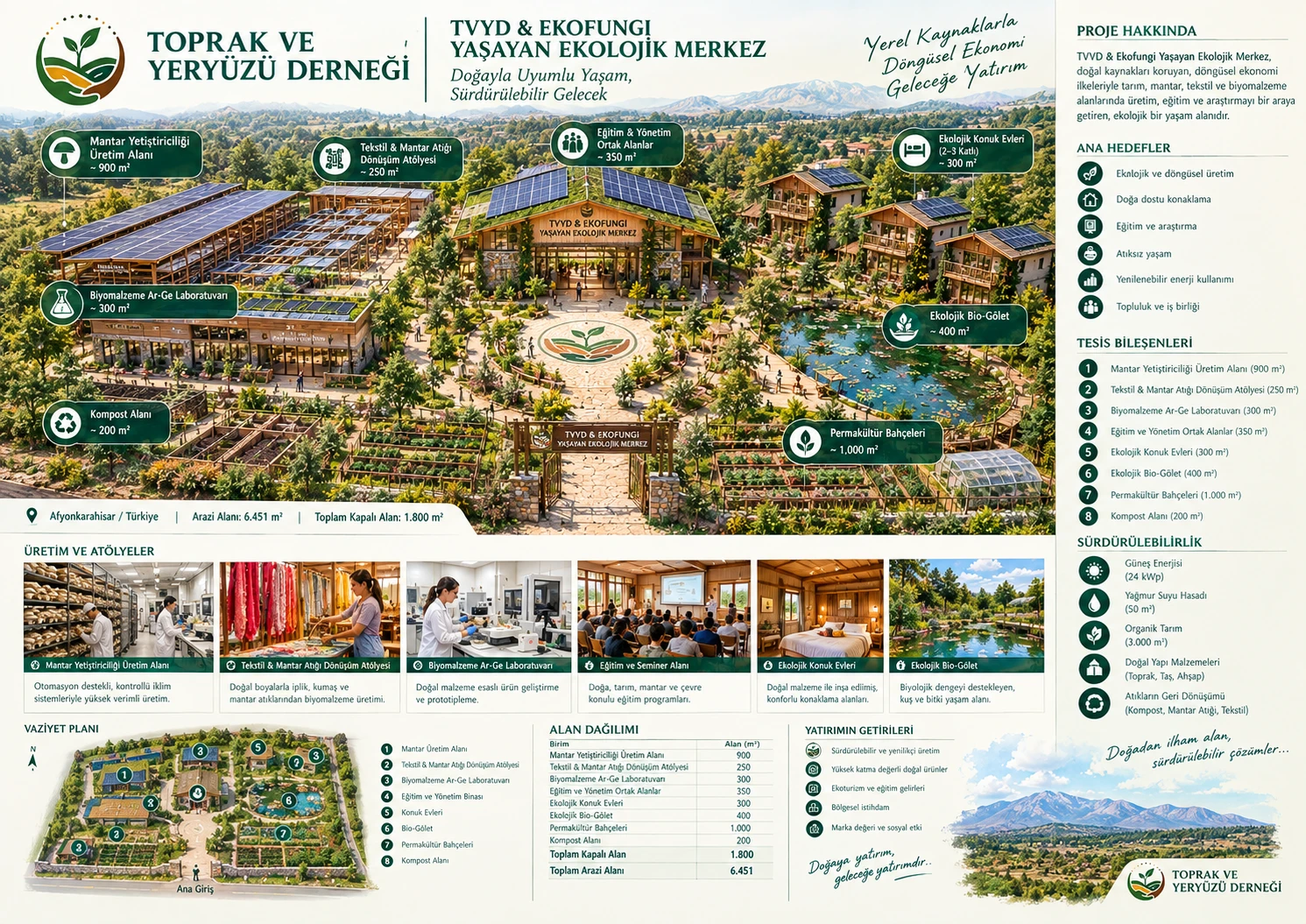
Ecological Centre
The overall view of the Ecological Living Centre, designed with green spaces, gardens and natural structures. We aim for every corner to carry traces of a sustainable life.
Organic Farming Areas
“We do not try to change nature; we try to understand it. We listen to the soil, follow the season, make use of what is offered to us and return what we take to the cycle of life. Because for us, production is not taking from nature but multiplying together with nature.”
Vegetable gardens, fruit trees and grain fields are not separate production areas; they are complementary parts of the same ecosystem.
- Instead of dominating the soil, we listen to it. We aim to observe what the soil needs and to shape production according to its natural cycles.
- We aim to support natural processes instead of chemical inputs. We make it our principle to protect the vitality of the soil, biological diversity and natural balance.
- We make use of what nature offers us. We aim for the waste from one production area to become a resource for another.
- We do not see anything merely as “waste”. The design envisages plant residues returning to compost, animal manure to the soil, and seeds to the next production season.
- Vegetables, fruit and grain are thought of together. The different production areas are planned to form an integrated system that supports one another.
- We aim to produce in step with the seasons. Instead of forcing nature's rhythm, we plan to choose crops suited to the climate and soil of our region.
- The aim is to protect water and soil, not to consume them. The use of methods that will secure the future of production is planned.
- We aim to follow the cycle from seed to table. We aim for the food produced to be used within the local system as far as possible.

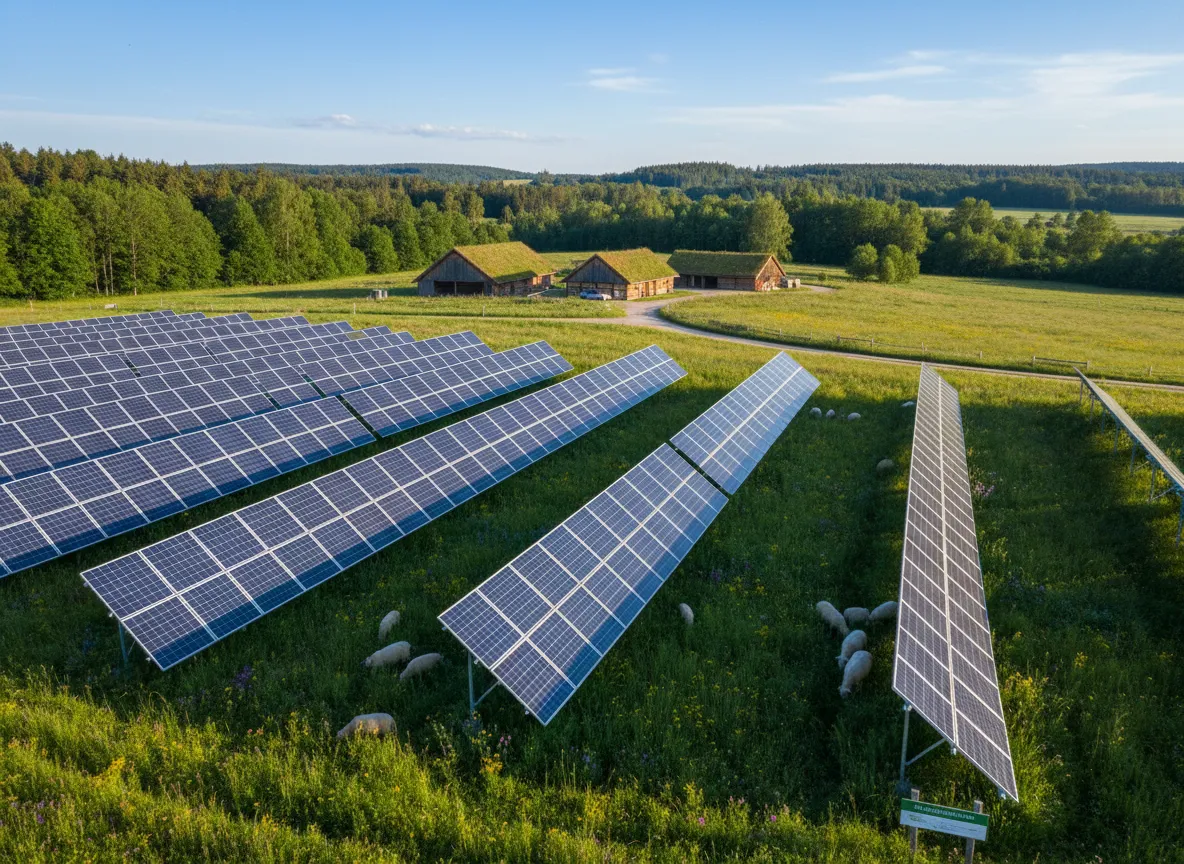
Renewable Energy
Each Ecological Living Centre draws on the sun, wind, water and biological resources of its geography to build an energy system suited to its own conditions. In this way, the centres become not just buildings that use clean energy, but living examples that turn the natural potential of their ecosystem into energy .
Ecological Living Centres do not think of energy as separate from nature. The energy system of each centre is designed according to the ecological and geographical characteristics of the region where it is established. The aim is not to transform nature, but to read the existing natural potential correctly and turn it into clean energy.
- In sunny regions: Electricity generation with solar power plants (SPP).
- In areas with high wind potential: Clean energy production with wind turbines.
- In regions with flowing water: Obtaining energy from the movement of water with small-scale water mills or suitable micro-hydro systems.
- In regions rich in biological resources: Energy solutions based on the use of organic waste.
- In regions with more than one natural resource: Hybrid systems in which resources such as sun, wind and water complement one another.
Protecting the Water Cycle
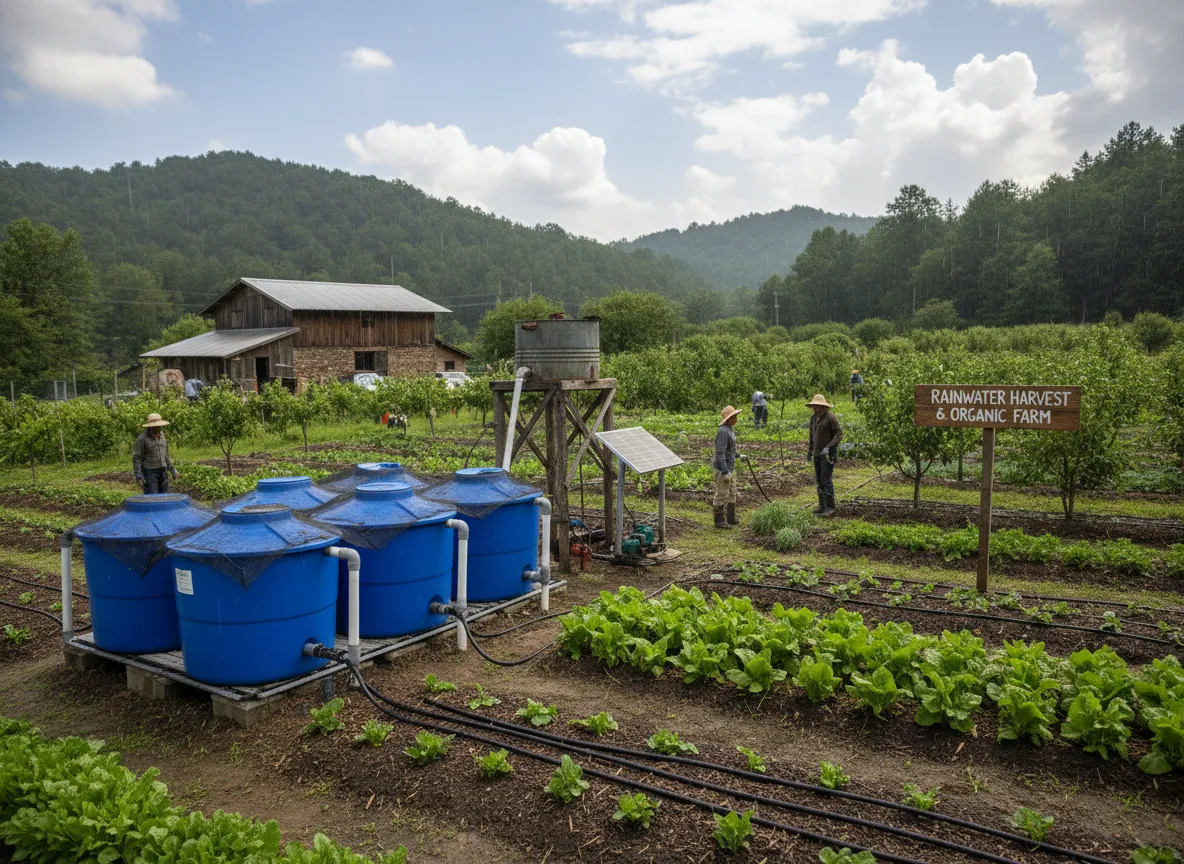
At the Ecological Living Centre, water is not seen as an unlimited resource but as life’s shared trust to be protected. We act by protecting the water cycle that runs from rain to soil, from soil to plant and back to nature.
- We do not lose rainwater; we collect it and use it again.
- With drip irrigation, we deliver water directly where it is needed.
- By increasing the water-holding capacity of the soil, we aim for more efficient production with less water.
- We create our own water management system for each region, taking into account its climate, rainfall and water resources.
- Wherever possible, we aim for the water we use to be reused and returned to the natural cycle rather than lost.
- Because for us, the value of water lies not only in its quantity, but in the cycle itself that sustains life.
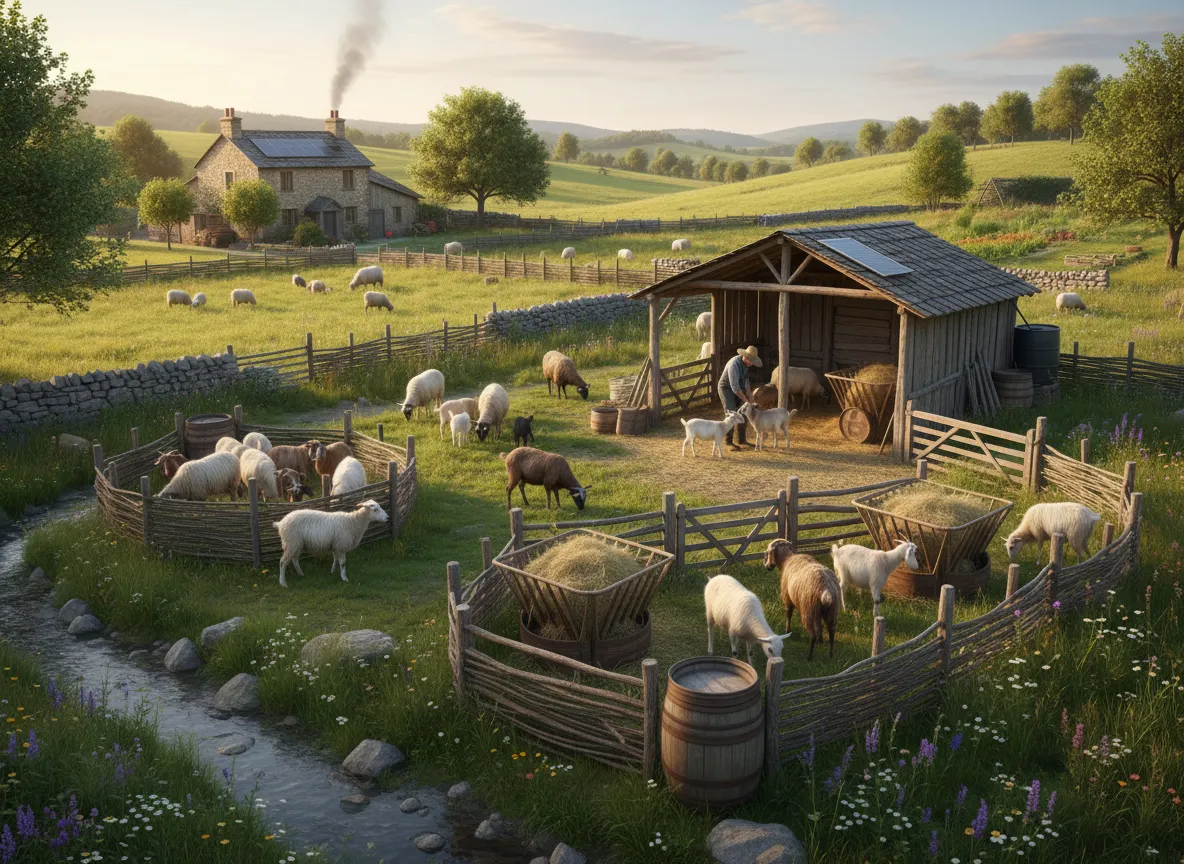
Small-Scale Animal Husbandry
Goat Breeding
- Goat milk: Creates added value by being turned into cheese, yoghurt, kefir and natural dairy products.
- Goat hair: Used in the production of textiles and natural fibres, so that it does not become waste.
- Manure: Used in the production of compost and organic fertiliser, contributing to soil fertility.
- Animal feeding: Forage crops and agricultural by-products produced at the centre are reused to feed the animals.
Sheep Breeding
- Sheep milk: Turned into cheese, yoghurt and other traditional products.
- Wool: Brought back into the cycle by being used in the production of insulation material, felt, textiles, handicrafts and biomaterials.
- Manure: Included in compost and soil improvement processes.
- Fleece waste: Suitable parts are reused in textile/biomaterial processes.
Social Transformation
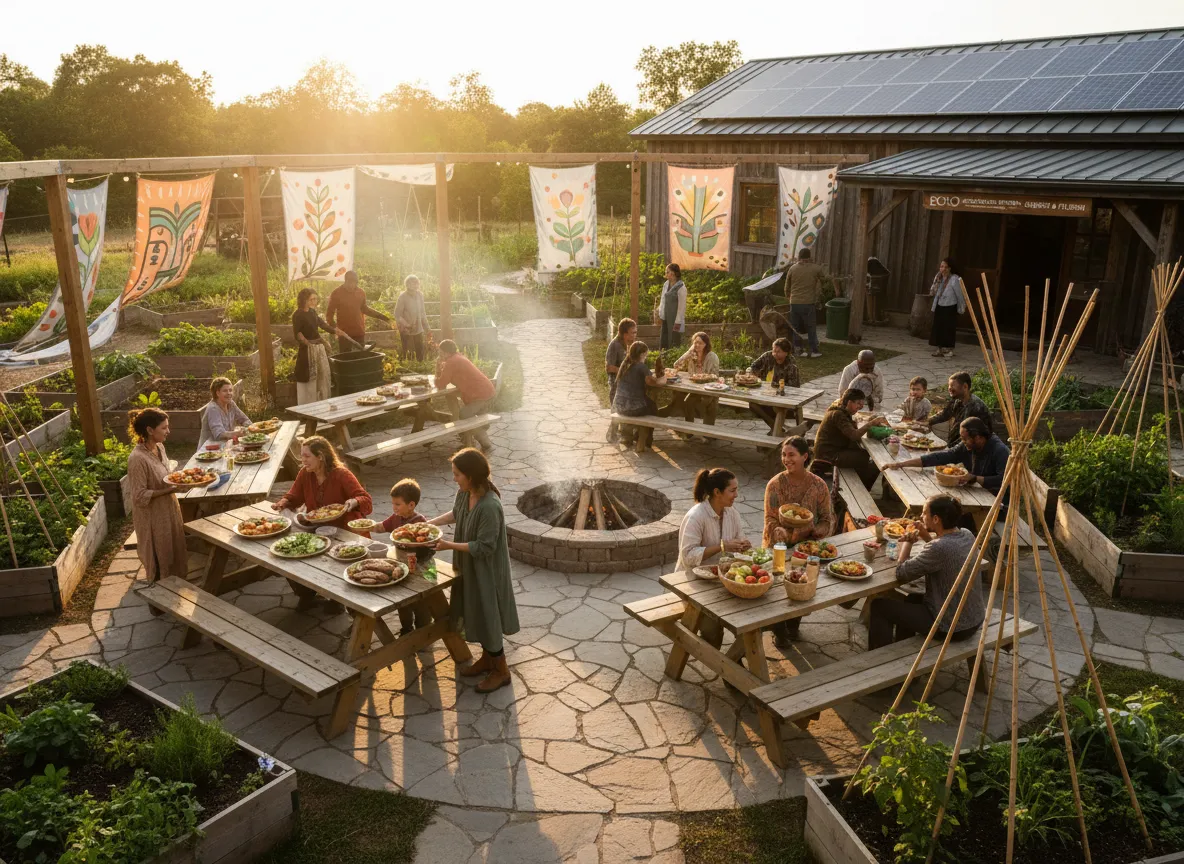
Community and Solidarity
“The Ecological Living Centre is not only a space that heals nature; it is a social transformation space that allows people to repair themselves, their relationship with the community and their bond with life.”
- Volunteering: People sharing their knowledge, skills, labour and time to contribute to the production and social life of the centre.
- Accommodation for people in need: Providing a safe place to live and an opportunity for a fresh start to people who need temporary or long-term support.
- Gaining work and a trade: Creating opportunities to work in production areas, receive practical training and gain vocational skills.
- Education and knowledge sharing: Opportunities for practical learning in ecology, agriculture, animal husbandry, recycling, handicrafts and sustainable living.
- Producing together: People from different ages, professions and social groups meeting in collaborative production processes.
- Social solidarity: Creating an inclusive environment that supports the reintegration into society of economically or socially disadvantaged individuals.
- Strengthening social bonds: Encouraging the transition from individual life to shared life, from consumption to production, and from loneliness to solidarity.
- Emotional and spiritual healing: Supporting individuals to feel valued again and part of society through nature, production, interaction with animals, shared living and meaningful work.
- Reconnecting with nature: Making room for people to reconnect with the soil, production, living beings and natural life cycles.
Life and Accommodation
Living together at the centre
The Ecological Living Centre is not only a place to visit but a place to live together. With the completion of the centre, accommodation options are planned for different groups of participants.
Volunteers
Seasonal accommodation for volunteers who contribute to the production and social life of the centre by sharing their knowledge, skills and labour.
Staff
Accommodation for team members who take on duties in the centre’s production, education and management processes.
Members
Accommodation where association members can stay while taking part in production, trainings and collective decision-making.
Guests
Short-term accommodation for visitors who come to see the centre and to take part in trainings and events.
Interns
Accommodation for students and interns who want to gain hands-on experience in ecology, agriculture and sustainable living.
Those who want to start again
A free accommodation and training programme for individuals and families is described in a separate section.
Accommodation types, durations and conditions will be determined as the centre takes shape; they will be announced on this page as they become clear. You can contact us for detailed information.
Partnership and Support
A liveable new world, beyond words alone
There is a lot of talk about climate and nature. We want to go beyond talk and build a place that can actually be lived in.
In the living centres to be established, we aim to see young people and individuals grow up with a view of climate, nature and the world that is respectful of the world and of their own lives, and useful to themselves and to the community they live in. The centres will offer accommodation; open the way to increasing income and acquiring new professions in ways that are in harmony with nature; and let people experience together a new way of living that includes everyone.
Fresh Start Programme
A fresh start for those with nothing left to hold on to
For individuals and families who have lost hope and feel they have nothing left to hold on to, the Ecological Living Centre aims to offer a safe place to live, meaningful work and the chance to get back on their feet. We believe it is never too late to start again.
The programme has not started yet and no applications are being accepted at the moment. It will be announced on this page once the centre is complete and the relevant legal framework is clear.
01
Free Accommodation
Individuals and families accepted into the programme stay free of charge at the centre and prepare for a new beginning in a safe environment.
02
Natural Living Skills Training
Participants learn and develop natural living skills such as ecological farming, small-scale animal husbandry, water and energy management and handicrafts through practical training.
03
Building Your Own Life
After the training, participants may, if they wish, continue to live and produce on the farm; or, if they wish, set up one of the centre’s units in their own living space anywhere in the world. Knowledge, experience and guidance support are provided during the set-up process.
Our principles for a healthy and responsible programme
Dignity and voluntariness
Every participant takes part in a dignified environment, of their own free will. Privacy and safety are essential.
Careful assessment
Applications are assessed with regard to the situation of the person and family, the capacity of the centre and the safety of other participants.
Cooperation with specialists
The centre is not a health or treatment institution. When necessary, we cooperate with relevant public institutions and specialists, and participants are referred accordingly.
Gradual progress
The programme will be launched in stages as the centre’s units come to life and capacity is built.
If you are in an emergency, you can call the 112 Emergency Call Centre; for social support, you can call the ALO 183 Social Support Line.
“The soil gives us not only food but also meaning, patience and togetherness.”
How Can You Take Part?
You can contribute to the Ecological Living Centre by registering for training programmes, taking part in volunteer work, developing cooperation with your organisation or joining the ongoing production processes. Let us plan the way that suits you best together.